 (1).webp)
Overview
Denatured ethanol is alcohol that has been deliberately made unfit to drink, even though it is chemically the same as the alcohol in a glass of spirits. Small amounts of additives turn a beverage molecule into an industrial and fuel product. That single tweak shapes how factories, fuel depots and tax authorities treat it. As the apex distillers' body since 1953, the All India Distillers Association (AIDA) handles both potable and industrial grades, so here is what the term really means.
What denatured ethanol is
Denatured ethanol is the alcohol with approved additives mixed in so it cannot be consumed. The additives may be bittering agents or mildly toxic compounds, added at the distillery before despatch. The goal is simple: keep it useful for industry while making it undrinkable.
The molecule itself does not change. The grade carries the same ethanol formula, C2H5OH, as any other alcohol of its kind. So the ethanol formula stays identical while the product around it shifts from beverage to industrial grade.
Why denatured ethanol exists
The main reason for denatured ethanol is to separate fuel and industrial alcohol from drinking alcohol, which is taxed and regulated very differently. Denaturing discourages diversion to the beverage market and can ease the tax treatment of industrial supplies.
For fuel, the grade also signals that the alcohol is meant for engines, not glasses. India moves large volumes of it into petrol blending, which is why clear rules govern how the alcohol is treated and transported.
Same structure, different purpose
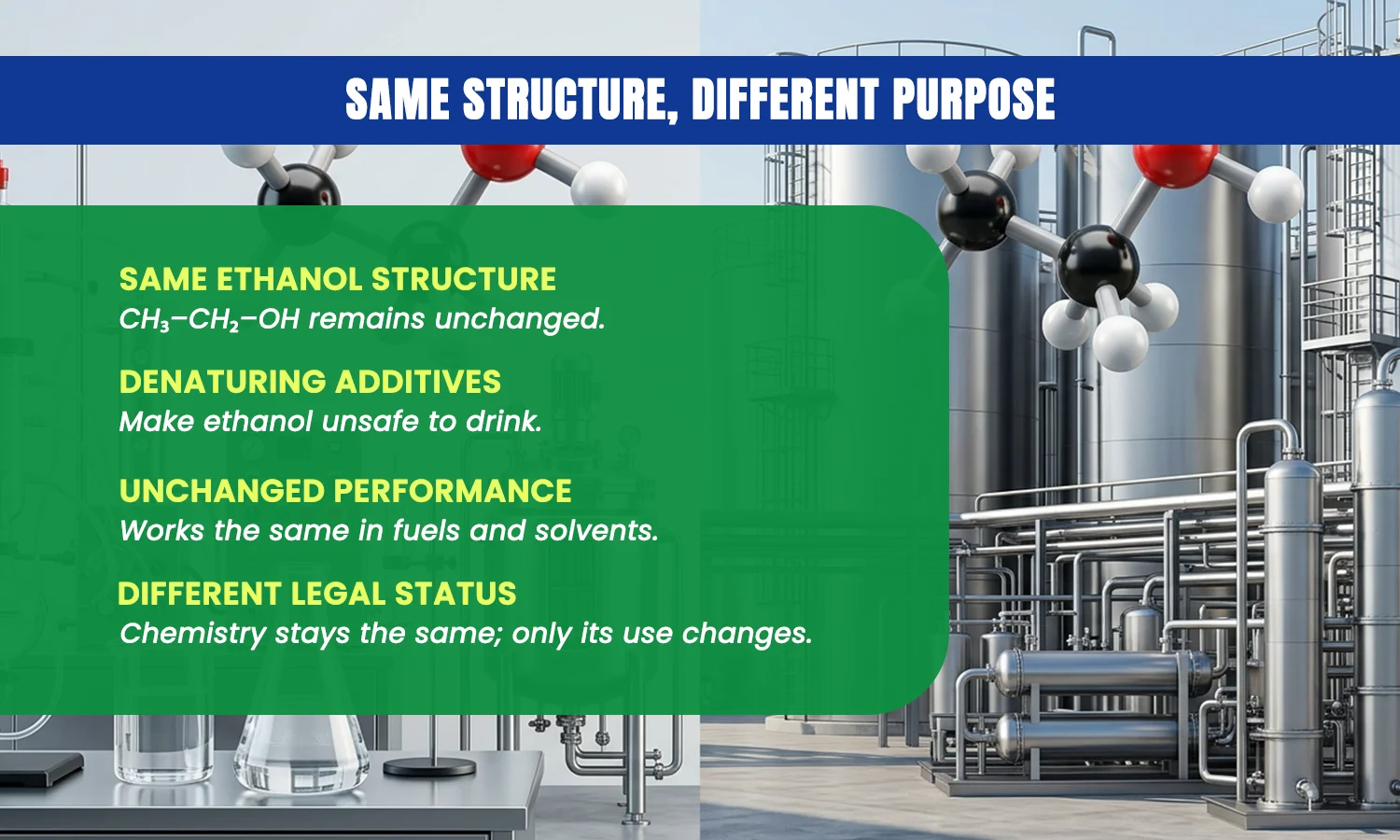
The ethanol structure, CH3-CH2-OH, is unchanged by denaturing. The additives sit alongside the molecule rather than altering it, so the ethanol structure that lets the alcohol burn cleanly and dissolve substances remains intact.
This is why denatured ethanol performs just like ordinary alcohol in fuel and solvents. The structure does the work, while the additives only prevent drinking. The chemistry is identical, the legal status is not.
What is denatured ethanol used for?
Ask what is ethanol of this kind used for, and the list is long. The grade appears in fuel, cleaning products, solvents, paints, varnishes and laboratory work. Asking what is ethanol doing in these products almost always points to the denatured type rather than the drinkable one.
These uses of ethanol rely on the alcohol being cheap, effective and clearly non-potable. Because the uses of ethanol here never involve drinking, denaturing adds safety and regulatory clarity without any loss of performance.
Denatured, renewable and road ready
Since Indian supply comes from crops, the denatured ethanol used in fuel is also renewable ethanol. The alcohol is fermented from plant sugars, dried and then treated, so it keeps the green credentials of renewable ethanol while gaining its industrial status.
Prepared for vehicles, the dried and treated alcohol becomes transport-grade ethanol, clean enough to travel and burn reliably. The Bureau of Indian Standards sets the rules for transport-grade ethanol, so the grade that reaches a pump performs consistently nationwide.
KEY TAKEAWAYS
- Denatured ethanol is alcohol made undrinkable with approved additives, while staying chemically identical to drinking alcohol.
- It shares the ethanol formula C2H5OH and the ethanol structure CH3-CH2-OH; only additives are introduced.
- Denaturing separates fuel and industrial alcohol from taxed, regulated beverage alcohol.
- Its uses include fuel, solvents, paints, cleaning products and laboratory work.
- Indian denatured ethanol used in fuel is renewable and supplied as transport-grade alcohol.
FREQUENTLY ASKED QUESTIONS
Q1. What is denatured ethanol?
Denatured ethanol is alcohol that has had small amounts of additives mixed in so it cannot be consumed, even though it remains chemically identical to drinking alcohol. The additives may be bittering or mildly toxic agents added at the distillery. The grade is used for fuel, solvents and industry rather than beverages.
Q2. Is denatured ethanol the same as drinking alcohol?
Denatured ethanol has the same ethanol formula and structure as drinking alcohol, so the molecule is identical. The difference is the additives mixed in to make it undrinkable. This lets industry and fuel suppliers use the alcohol while keeping it separate from the regulated, taxed beverage market. It should never be consumed.
Q3. Why is denatured ethanol used in fuel?
Denatured ethanol is used in fuel because it clearly marks the alcohol as meant for engines rather than drinking, which simplifies regulation and taxation. Since the ethanol structure is unchanged, it burns and mixes exactly like other fuel alcohol. India uses large volumes of it as transport-grade ethanol in petrol blending.
Q4. What are the main uses of denatured ethanol?
The main uses of denatured ethanol include petrol fuel, industrial solvents, paints, varnishes, cleaning products and laboratory work. These uses of ethanol depend on the alcohol being effective and clearly non-potable. Because Indian supply is renewable, the grade used in fuel also carries the benefits of crop-based renewable ethanol.
ABOUT AIDA
AIDA, the All India Distillers' Association, has been the voice of Indian distilleries since 1953 and is recognised as the apex national body for ethanol, bioenergy and potable alcohol. Its members hold more than 80 percent of the country's distillation capacity. Read more across the cluster at aidaindia.org.