
.webp)
Overview
Anhydrous ethanol is the grade that made E20 possible. It is the alcohol with nearly all its water removed, pure enough to mix into petrol without separating. That last fraction of water is the difference between a fuel that works and one that fails in the tank. As India's apex distillers' body since 1953, the All India Distillers Association (AIDA) works with this grade every day. Here is what it is, why it matters and how it differs from the alcohol you might already know.
What anhydrous ethanol is?
Anhydrous ethanol means the alcohol is at least 99.5 percent pure, with water cut to 0.5 percent or less. The word anhydrous literally means without water, and that is the entire point of the grade.
The chemistry behind it is the familiar ethanol formula, C2H5OH. The grade has the same ethanol formula as any other alcohol of its kind, only with the surrounding water removed. Nothing changes in the molecule itself, just its company.
Why fuel needs anhydrous ethanol, not ordinary alcohol?
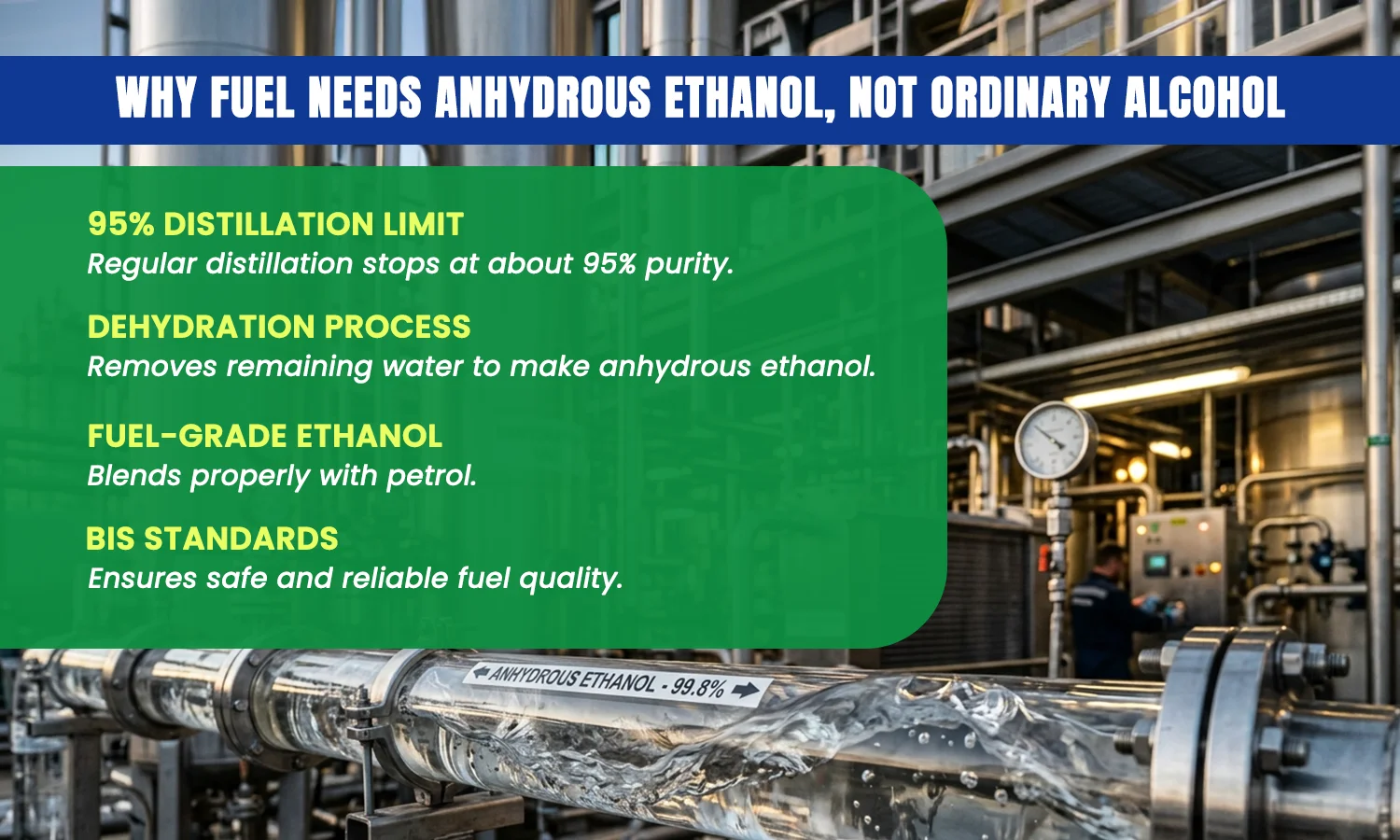
Plain distillation can only take the alcohol to about 95 percent purity, because alcohol and water form a stubborn mixture at that point. Getting past it to anhydrous ethanol needs an extra dehydration step using molecular sieves or similar methods.
Why bother? Because water and petrol separate, and even a little water in fuel can cause the mixture to split and corrode the system. Only anhydrous ethanol stays mixed in petrol, which is why Indian fuel-grade alcohol follows the Bureau of Indian Standards specification for it.
The structure that lets anhydrous ethanol work
The ethanol structure, CH3-CH2-OH, explains both the challenge and the solution. The hydroxyl group at the end loves water and forms hydrogen bonds with it, which is exactly why removing that last water is so hard.
Once stripped, the same ethanol structure that clings to water also burns cleanly in an engine. So the very feature that makes the grade difficult to produce is what makes the alcohol such a good fuel in the first place.
What is anhydrous ethanol used for?
Ask what is ethanol of this grade used for, and the headline answer is fuel. Petrol blending demands anhydrous ethanol, and India now mixes it up to 20 percent in E20. Beyond fuel, the question what is ethanol at high purity good for brings up pharmaceuticals, fine chemicals and laboratory work where water would interfere.
These wider uses of ethanol at high purity include reactions that cannot tolerate moisture and products that demand a clean solvent. The same dryness that fuel needs also serves the chemist, so the uses of ethanol in this form span well beyond the petrol pump.
Anhydrous, renewable and ready for transport
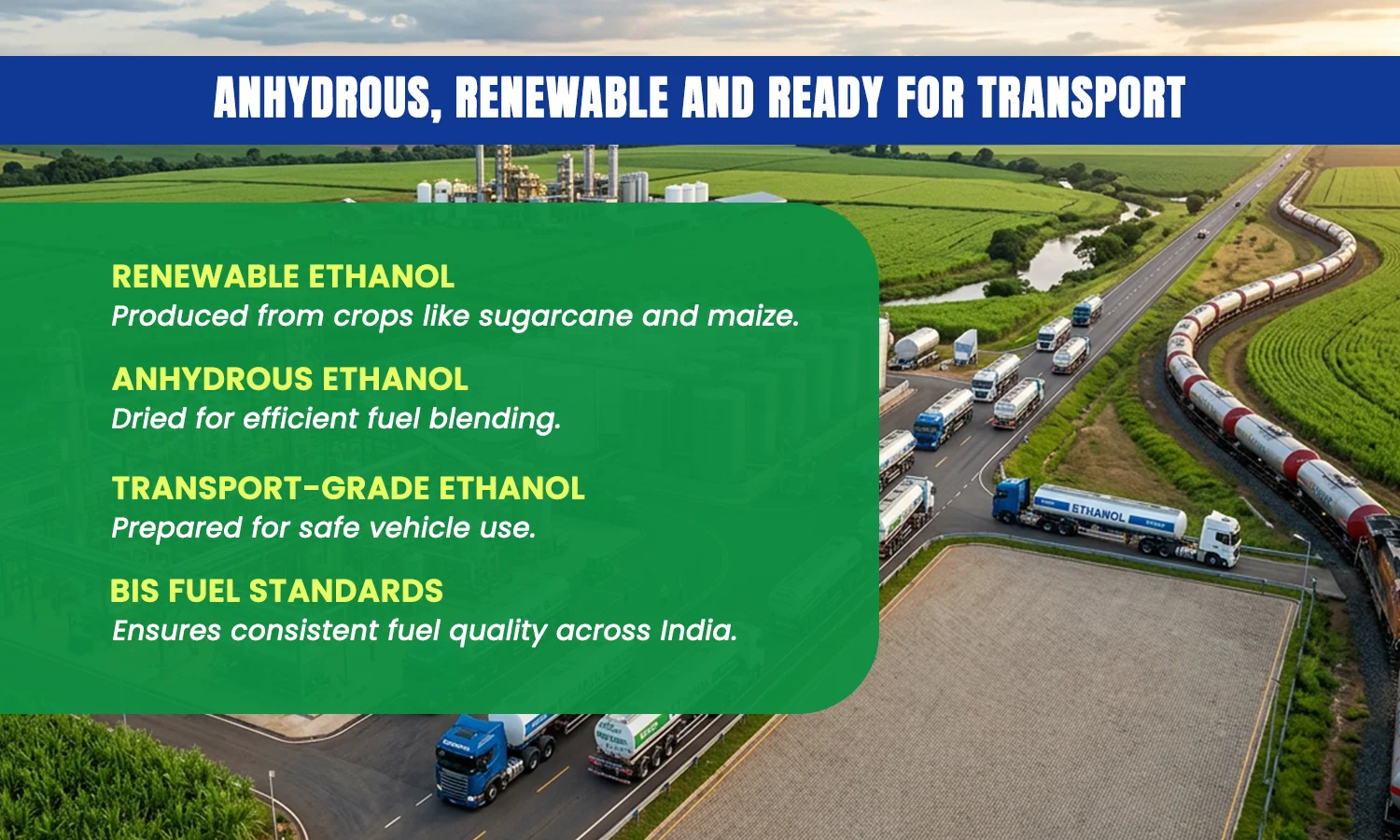
Because Indian supply comes from crops, the anhydrous ethanol in your petrol is also renewable ethanol. It is dried from alcohol that yeast built out of sugar, so the same molecule can be grown again, which is what makes renewable ethanol sustainable.
Prepared for vehicles, this dry alcohol becomes transport-grade ethanol, clean enough to travel by tanker and fire reliably. The Bureau of Indian Standards sets the rules for transport-grade ethanol, ensuring the grade that leaves a distillery performs the same wherever it ends up.
India’s fuel future needs cleaner, purer ethanol.
Want to be part of the journey? Connect with the All India Distillers Association and stay ahead of India’s evolving ethanol industry.
KEY TAKEAWAYS
- Anhydrous ethanol is the alcohol at 99.5 percent purity or better, with water cut to 0.5 percent or less.
- It shares the ethanol formula C2H5OH and the ethanol structure CH3-CH2-OH; only the water is removed.
- Fuel needs this grade because water separates from petrol and can corrode the fuel system.
- Plain distillation stops near 95 percent, so an extra dehydration step is required to reach anhydrous grade.
- Indian anhydrous ethanol is renewable and supplied as transport-grade fuel under Bureau of Indian Standards rules.
FREQUENTLY ASKED QUESTION
Q1. What is anhydrous ethanol?
Anhydrous ethanol is the alcohol with almost all of its water removed, giving a purity of at least 99.5 percent. The word anhydrous means without water. This grade is required for petrol blending because water separates from fuel, so only it can be mixed into petrol reliably and safely for engines.
Q2. How is anhydrous ethanol different from regular ethanol?
Anhydrous ethanol differs only in water content. Ordinary distillation reaches about 95 percent purity, but the anhydrous grade is dried further to 99.5 percent or higher using molecular sieves or similar methods. The ethanol formula and structure stay the same; the grade simply removes the remaining water for fuel use.
Q3. Why is anhydrous ethanol used in petrol?
Anhydrous ethanol is used in petrol because any water in the fuel would cause the alcohol and petrol to separate and could corrode the fuel system. Drying it to this grade keeps the mixture stable. This is why India's E20 fuel relies on anhydrous, transport-grade alcohol that meets Bureau of Indian Standards rules.
Q4. Is anhydrous ethanol renewable?
Yes, the anhydrous ethanol used in India is renewable because it is made from crops such as sugarcane, maize and surplus grain. Yeast builds the alcohol from plant sugars, and the crops regrow each season. After fermentation and distillation, it is dried to the anhydrous, renewable grade for blending into petrol.
ABOUT AIDA
AIDA, the All India Distillers' Association, has been the voice of Indian distilleries since 1953 and is recognised as the apex national body for ethanol, bioenergy and potable alcohol. Its members hold more than 80 percent of the country's distillation capacity. Read more across the cluster at aidaindia.org.