IS 18380:2023: Setting the Standard for Safe and Clean Ethanol Cookstoves in India
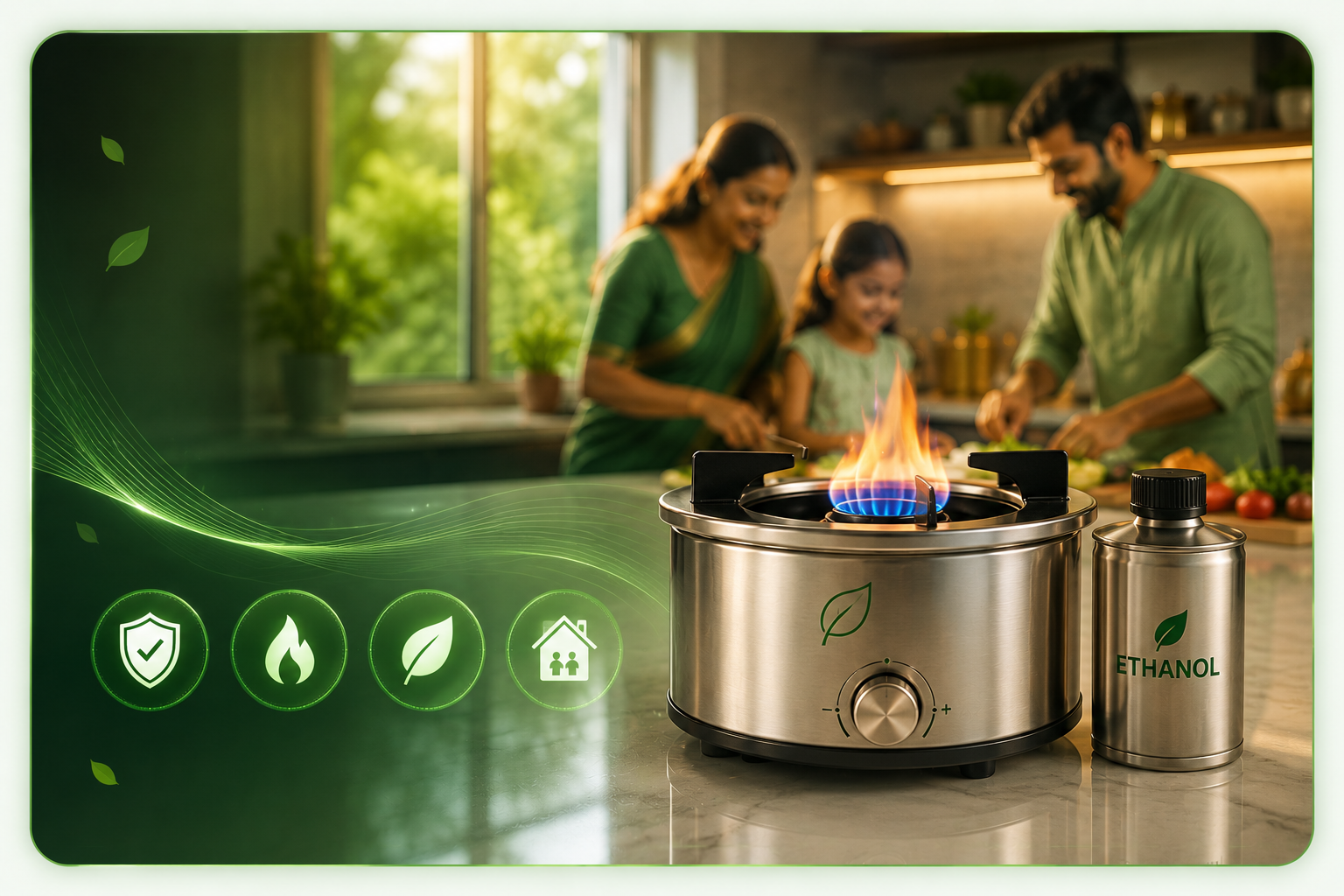
As conversations around clean cooking fuel continue to grow in India, ethanol-based cookstoves are gradually emerging as a practical alternative to traditional fuels like biomass and kerosene. To support this transition, the Bureau of Indian Standards introduced IS 18380:2023, a standard specifically developed for domestic ethanol cookstoves using fixed or removable canisters.
At its core, the standard is about one thing: ensuring that ethanol cookstoves used in homes are safe, reliable, and efficient enough for everyday cooking.
Why This Standard Matters
For many households, especially in areas where LPG access remains limited or expensive, cooking alternatives still involve firewood, kerosene, or other polluting fuels. Ethanol stoves are being seen as a cleaner option because they burn with comparatively lower emissions and operate without pressure, reducing several safety concerns associated with conventional liquid-fuel systems.
IS 18380:2023 attempts to create a benchmark for these stoves so that consumers are not left guessing about quality or safety.
The standard applies only to domestic cookstoves operating at atmospheric pressure. It excludes pressurized systems and industrial cooking appliances, clearly showing that the focus is on simple, household-level cooking solutions.
A Strong Focus on Safety and Construction
One of the most noticeable aspects of the standard is how much attention is given to preventing fuel leakage and unstable flames.
Since ethanol is highly flammable, even minor leakages can become dangerous in household environments. To address this, the standard requires the fuel canister to remain leak-proof even when the stove is slightly tilted — a small but very practical detail considering everyday kitchen use.
For removable canister models, manufacturers must include a proper locking mechanism so that the canister cannot accidentally detach while the stove is operating.
The materials used in construction must also resist corrosion and heat damage, with stainless steel commonly preferred. Burners are expected to produce a steady and uniform flame without issues like flashback or flame lifting, both of which can affect cooking safety and performance.
Efficiency Is Just as Important
Safety alone is not enough if the stove is not practical for regular cooking. That is why the standard also specifies performance requirements.
IS 18380:2023 sets a minimum thermal efficiency of around 56%, ensuring that the stove uses fuel effectively rather than wasting energy. Fuel consumption must remain within acceptable limits, and the flame should stay stable even when exposed to mild air movement commonly found in kitchens.
This balance between efficiency and safety is important because adoption of cleaner cooking technologies often depends on whether households find them economical and convenient in daily use.
Cleaner Combustion and Lower Emissions
A major reason ethanol cookstoves are gaining attention is their potential to reduce indoor air pollution compared to traditional biomass or kerosene stoves.
The standard therefore includes emission limits for carbon monoxide and nitrogen oxides, while also monitoring the CO/CO2 ratio to ensure proper combustion. These measures are not only about environmental performance but also about household safety, since incomplete combustion can create harmful indoor conditions.
In many ways, the emissions requirements reflect a broader shift toward cleaner and healthier cooking technologies in India.
User Safety Remains Central
The safety section of the standard is extensive, which is understandable given the fuel involved.
The stove must not leak during normal operation or under mildly abnormal conditions. Surfaces likely to come into contact with users should not become dangerously hot, and the design must minimise risks such as sudden flare-ups or uncontrolled flames.
The standard also requires safe and simple ignition and extinguishing mechanisms. Vapour emissions are controlled as well, reducing the possibility of accidental fires caused by ethanol vapours accumulating around the appliance.
Building Consumer Confidence
Apart from technical requirements, IS 18380:2023 also places importance on proper labeling and traceability.
Manufacturers are required to provide details such as fuel type, operating instructions, and identification information. Products that successfully meet the prescribed tests can carry the BIS Standard Mark, giving consumers greater confidence in the product’s safety and compliance.
The testing process itself covers efficiency, emissions, leakage resistance, durability, and overall performance under realistic operating conditions.
A Step Toward Cleaner Cooking
Overall, IS 18380:2023 comes across as a thoughtful and well-balanced standard. It recognises the potential of ethanol cookstoves as a cleaner alternative for households while also acknowledging the practical realities of safety, durability, and everyday usability.
Of course, the success of ethanol cookstoves in India will depend on more than technical standards alone. Factors such as ethanol availability, affordability, and supply infrastructure will play a major role in determining large-scale adoption.
Still, by clearly defining what a safe and functional ethanol cookstove should look like, the standard lays an important foundation for expanding cleaner cooking solutions across the country.