
.webp)
Overview
Clean mobility in India means moving people and goods with far lower emissions. Ethanol mixed into petrol now powers a large share of that shift, cutting oil imports and supporting farmers. This piece explains how renewable fuels turn everyday travel into a cleaner and more secure system.
Every day, hundreds of millions of journeys happen across India on two-wheelers, cars, buses, and trucks. Most still burn imported fuel. Clean mobility is the effort to change that picture, lowering emissions and reducing the country's dependence on foreign oil at the same time. Renewable fuels, led by ethanol, are one of the most practical ways to make it happen right now.
Unlike solutions that need entirely new vehicles or fresh infrastructure, ethanol works with the petrol network India already owns. That is why it has become a foundation for clean mobility rather than a distant promise. It lets the country make progress on clean mobility while the market for newer technologies matures.
Why Clean Mobility Matters for India?
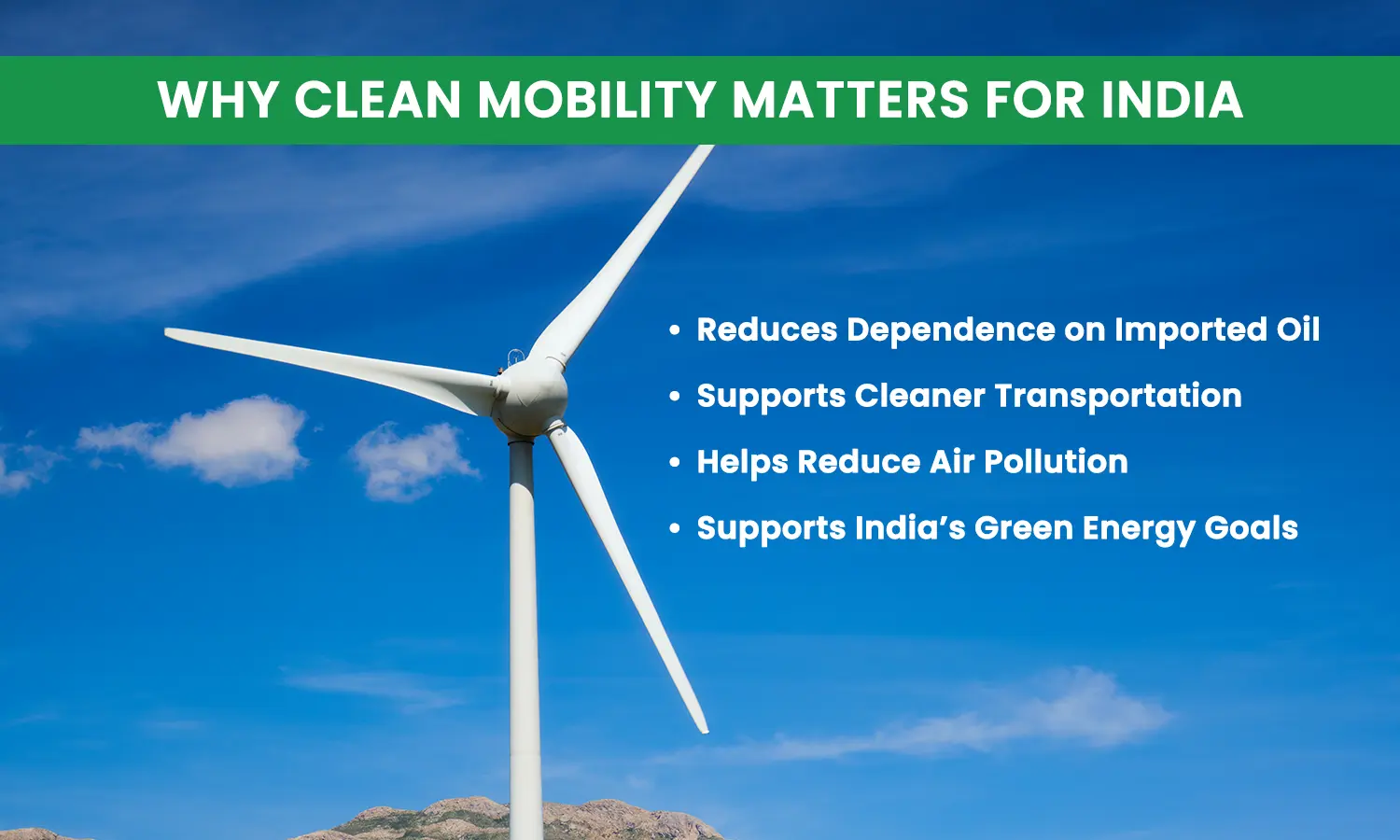
India imports over 85% of its crude oil. When global prices rise, transport costs climb for families and businesses alike. Reducing that exposure is a national priority, and cleaner transport is central to it. This is where clean energy fuels enter the story, because they replace part of the imported barrel with something grown at home.
The environmental case is just as strong. Road transport is a major source of city air pollution, and shifting toward clean energy fuels helps lower harmful tailpipe output. For a country balancing rapid growth with climate commitments, cleaner transport is one of the clearest levers available. Meeting India's future energy needs without adding to that pollution is exactly the challenge cleaner transport is built to solve. It ties directly to India's Net Zero goals and to the wider green energy transition.
Ethanol Is the Engine Behind the Shift?
The clearest driver of clean mobility in India is the Ethanol Blended Petrol Programme. By mixing ethanol into petrol, the country has reached roughly 20% blending in the 2024-25 supply year, known as e20 ethanol petrol. That milestone arrived about five years ahead of the original 2030 target.
The results are measurable. According to the Press Information Bureau, the programme has substituted nearly 316 lakh metric tonnes of crude oil since 2014-15 and saved more than 1.4 lakh crore rupees in foreign exchange. Those figures show how e20 ethanol petrol links directly to energy security, not just cleaner air.
Ethanol also carries a rural dividend. Farmers and distilleries have earned lakhs of crores from the programme, turning clean mobility into a source of village income. Few transport solutions send benefits so directly to the farm gate. Readers can see the full detail in our explainer on fuel ethanol.
Bioenergy and the Circular Advantage
Ethanol is part of a larger renewable system. Crop residue that once burned in fields can now become fuel, which is a core idea behind bio energy renewable thinking. Compressed biogas from farm and food waste adds another cleaner option for transport and cooking.
This circular model gives clean mobility an edge in India. It turns waste into value while cutting emissions. The same principle drives interest in bio energy renewable projects across sugar-producing states, where mills convert by-products into both power and fuel. Our coverage of bioenergy explores this circular loop in more depth.
A Balanced View of the Road Ahead
Ethanol is powerful, yet it is not the only path. India is pursuing several clean options together, and each has a role.
Pathway |
Strength |
Best Fit |
Ethanol and biofuels |
Works with current petrol vehicles |
Immediate emission cuts |
Electric vehicles |
Zero tailpipe emissions |
Short, predictable routes |
CNG and hydrogen |
Lower-emission options |
Fleets and heavy transport |
This balance shapes the future of energy in Indian transport. No single technology suits every journey, and a healthy mix delivers the fastest gains. Ethanol earns its place because it uses feedstocks the country already grows, which strengthens the case for a diverse future of energy rather than a one-size answer. Planning future energy supply around several fuels, rather than betting on one, is how India keeps both costs and emissions in check.
Looking Toward a Cleaner Fuel Future
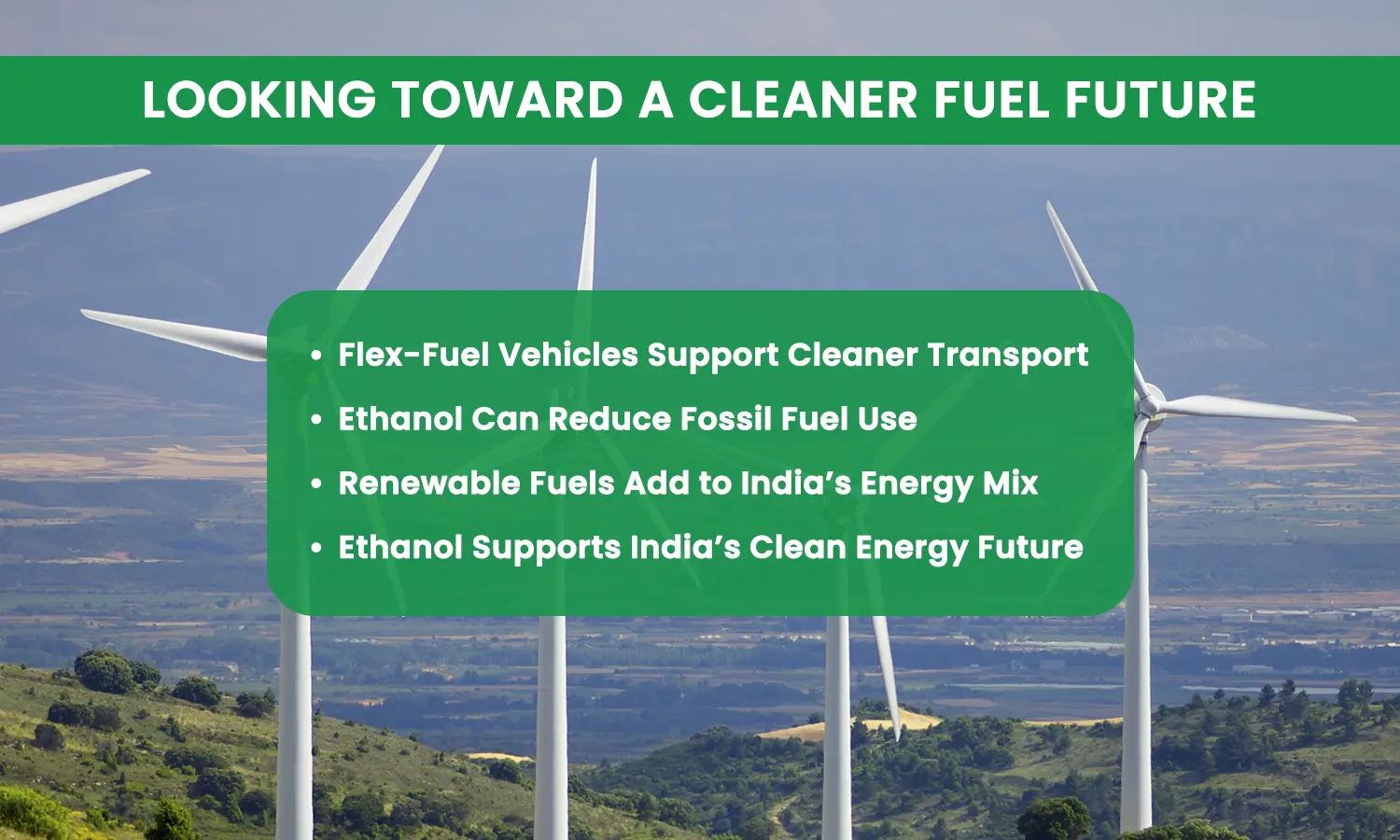
The direction of travel is set. As flex-fuel vehicles reach more showrooms, higher ethanol shares will support the clean energy future India is building. These vehicles run on any petrol-ethanol ratio up to E85, giving drivers a bigger role in the clean energy future without swapping engines.
Planners increasingly describe the future of energy use in transport as a portfolio, where renewable fuels, electricity, and gas each serve a purpose. In that vision, ethanol is a mainstream contributor. It shows that the future of energy use can be cleaner while still relying on resources India already produces, which is the essence of building clean energy of the future at scale. This is how a farm crop becomes part of the clean energy of the future on Indian roads.
Be Part of India's Clean Transport Story
India's move toward cleaner roads is already delivering results, and ethanol sits at the heart of it. As the apex body for ethanol, bioenergy, and potable alcohol, AIDA supports the distilleries and farmers powering this change. All India Distillers Association for latest insights, resources and updates on India’s evolving bioenergy and clean mobility landscape.
- Clean mobility in India relies heavily on ethanol, which mixes into the existing petrol network without new engines.
- India reached about 20% ethanol blending in 2024-25, roughly five years ahead of the 2030 target.
- The programme has cut crude imports by nearly 316 lakh metric tonnes and saved over 1.4 lakh crore rupees since 2014-15.
- Renewable fuels support rural income, turning cleaner transport into a source of farm earnings.
- Ethanol is one part of a balanced mix that also includes electric, CNG, and hydrogen options.
Frequently Asked Questions
What does clean mobility mean in India?
Clean mobility means moving people and goods with lower emissions and less reliance on imported oil. In India it leans heavily on ethanol mixed into petrol, which works with existing vehicles. This makes cleaner transport possible today rather than only after a full shift to new technology.
How does ethanol support clean mobility?
Ethanol replaces part of the petrol in every tank, which lowers imported crude use and cuts emissions. India now runs on roughly 20% ethanol petrol, a level called E20. This makes ethanol one of the most immediate tools for clean mobility across the country's huge vehicle fleet.
Is clean mobility only about electric vehicles?
No. Electric vehicles are important, yet clean mobility in India also depends on ethanol, biogas, CNG, and hydrogen. Each suits different needs and routes. A balanced mix delivers faster emission cuts than relying on any single technology, especially given India's large and varied transport base.