
Overview
Fuel ethanol is alcohol made from crops and waste, mixed into petrol to cut emissions and oil imports. India now runs on roughly 20% ethanol petrol, reached years ahead of target. This piece explains how it is produced, why it matters, and where the technology heads next.
Few energy stories in India have moved as fast as ethanol. In a little over a decade, a by-product of the sugar industry has grown into a national fuel that reaches almost every petrol pump in the country. Fuel ethanol is now a core part of how India powers its vehicles while trying to import less oil and support its farmers.
The idea is simple. Ethanol is alcohol produced from sugarcane, grain, and crop residue. When mixed into petrol, it stretches each barrel of crude further and lowers the carbon released on the road. That simple swap has turned fuel ethanol into one of the country's most successful clean energy tools.
How Fuel Ethanol Is Made
The production of fuel ethanol begins with feedstocks that India grows in abundance. Sugarcane molasses has long been the backbone, joined now by sugarcane juice, maize, surplus rice, and damaged foodgrain. These are fermented and distilled into high-purity alcohol suitable for engines.
The National Policy on Biofuels of 2018, amended in 2022, widened this feedstock list and advanced the blending target. That policy support helped ethanol production capacity grow from under 2 billion litres in 2014 to nearly 20 billion litres. This scale is what allows ethanol blended petrol to reach pumps nationwide rather than in a few pilot regions.
Crop residue adds a further layer. Second-generation plants turn paddy straw and other waste into alcohol, which reduces field burning. In this way ethanol blended petrol connects directly to cleaner air and better waste management.
Why Fuel Ethanol Matters for India?
India imports over 85% of its crude oil, so every domestic litre counts. The Ethanol Blended Petrol Programme has substituted nearly 316 lakh metric tonnes of crude oil since 2014-15 and saved more than 1.4 lakh crore rupees in foreign exchange, according to the Press Information Bureau.
The higher the petrol ethanol content, the greater these savings become. India reached roughly 20% blending in the 2024-25 supply year, a level known as E20, about five years ahead of the original 2030 target. Raising petrol ethanol content to this level marks one of the fastest fuel transitions any large economy has managed.
There is a rural payoff too. The programme has channelled more than 1.66 lakh crore rupees toward farmers, turning fuel ethanol into a source of village income as well as national energy security. The wider picture appears in our green energy pillar and the guide to clean mobility.
Ethanol and the Companies Powering It
As demand grows, interest in the sector has surged. Searches for the top 10 green energy companies in india increasingly surface sugar producers and distilleries that supply ethanol, not only solar or wind firms. This reflects how central renewable fuel has become to the clean energy economy.
The same shift shows in queries about the top renewable energy companies in india, where ethanol makers now sit alongside traditional power generators. AIDA represents many of the distilleries at the centre of this expansion. For readers comparing sectors, the presence of ethanol producers among the top 10 green energy companies in india shows how far the fuel has come, and it explains why the top renewable energy companies in india list keeps widening.
From Blending to Flex Fuel
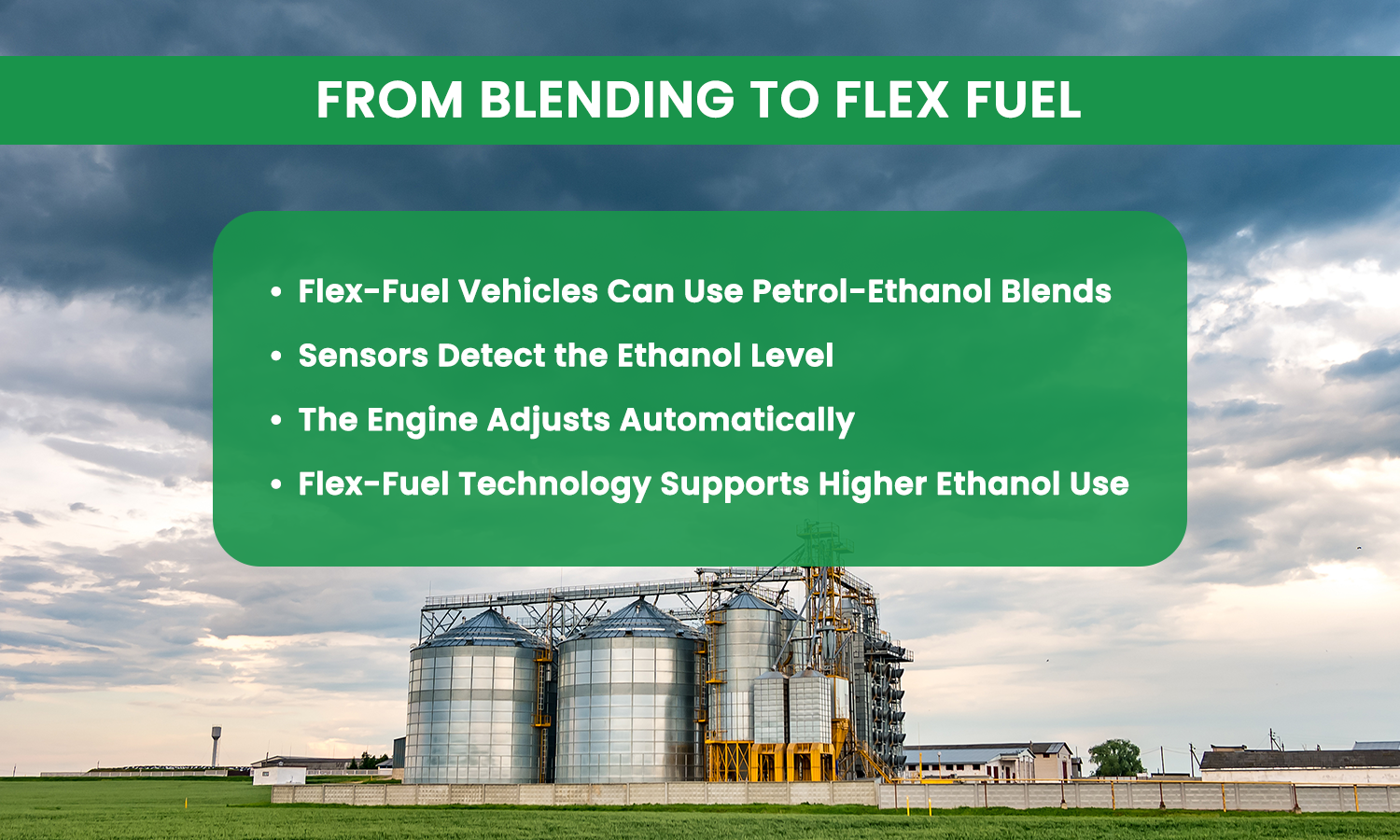
Mixing ethanol into petrol is only the first stage. The next is the flex-fuel vehicle, and understanding Flex Fuel Technology helps explain where the market is going. These vehicles run on any petrol-ethanol ratio up to E85, meaning 85% ethanol.
A common question is simple. How Do Flex Fuel Vehicles Work? They use a sensor that reads the ethanol level in the tank and adjusts the engine automatically, so the same car handles different mixes without manual changes. This makes higher ethanol shares practical for everyday drivers, which is why Flex Fuel Technology is seen as the next step for fuel ethanol in India.
Buyers naturally ask about running costs. Our page on flex-fuel price in India looks at the numbers, while the guide to how flex-fuel technology works answers the technical side in full.
Cost, Efficiency, and Honest Trade-offs
Ethanol carries less energy per litre than petrol, so a very high mix can affect mileage. This is central to any discussion of flex fuel economy, and an honest view matters. For most drivers at current blends the effect is small, and cleaner emissions offset it.
The running-cost picture depends on the local flex fuel price in india, which can make higher ethanol mixes attractive when ethanol is cheaper than petrol. Weighing flex fuel economy against fuel savings is how buyers judge the real value, and it varies by region and vehicle. Anyone comparing the flex fuel price in india should therefore look at the cost per kilometre, not only the price per litre.
Key Takeaways
- Fuel ethanol is alcohol made from sugarcane, grain, and crop residue, then mixed into petrol.
- India reached roughly 20% ethanol petrol in 2024-25, about five years ahead of the 2030 target.
- The programme cut crude imports by nearly 316 lakh metric tonnes and saved over 1.4 lakh crore rupees since 2014-15.
- Ethanol supports farmers, sending more than 1.66 lakh crore rupees toward the rural economy.
- Flex-fuel vehicles are the next step, allowing much higher ethanol shares in everyday cars.
Frequently Asked Questions
What is fuel ethanol?
Fuel ethanol is a clean-burning alcohol made from crops like sugarcane and maize and from crop residue. It is mixed into petrol to reduce emissions and cut imported oil use. In India it now makes up about 20% of petrol at the pump, a level known as E20.
How does fuel ethanol help India?
By replacing part of every petrol tank, fuel ethanol lowers crude oil imports, saves foreign exchange, and reduces emissions. It also supports farmers, since sugar mills and grain growers earn from ethanol demand. This makes it both an energy security tool and a rural income source at the same time.
Is fuel ethanol bad for engines?
For most modern vehicles at current blends, fuel ethanol is safe and approved. Very high ethanol mixes need engines designed for them, such as flex-fuel vehicles. So How Do Flex Fuel Vehicles Work? They read the ethanol level in the tank and adjust the engine automatically, letting higher ethanol shares run without affecting reliability in everyday driving.
Will ethanol replace petrol completely?
Not on its own. Fuel ethanol is a major part of India's cleaner fuel mix, but the country is also pursuing electric, CNG, and hydrogen options. Each suits different needs. Ethanol stands out because it uses crops India already grows and works with the existing petrol network.
Power Your Understanding of India's Fuel Shift
Ethanol has moved from a sugar by-product to a national fuel in barely a decade, and the momentum is still building. As the apex body for ethanol, bioenergy, and potable alcohol, AIDA supports the distilleries and farmers driving this change. To follow where fuel ethanol goes next, continue through the AIDA cluster and connect with the industry shaping India's renewable fuel future.